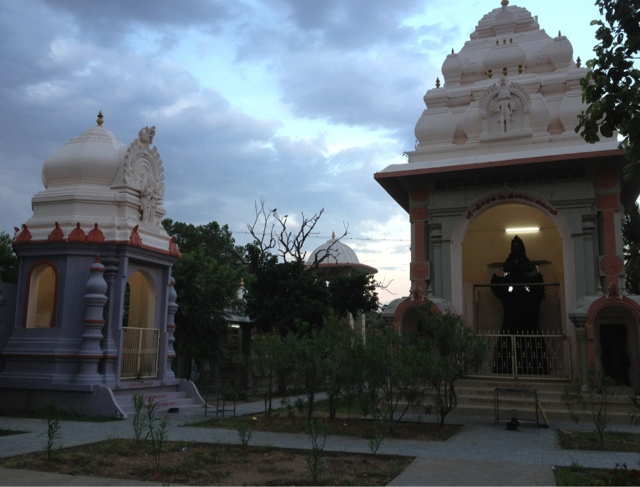
Showing posts with label Temples of Tamil Nadu. Show all posts

Friday, 19 April 2024

Nellaiappar Temple, Tamil Nadu


The Nellaiappar temple is a landmark of Tirunelveli, in South Tamil Nadu. A visit to the town would not be complete without exploring this temple, which boasts larger size than the Meenakshi Amman Temple in Madurai. It is a popular destination for both pilgrims and tourists.

The temple is adorned with intricate sculptures that must be seen in person to be truly appreciated. The vast temple campus is supported by numerous uniquely sculpted stone pillars, each showcasing exquisite artwork. The main mandapam features musical pillars that produce different tones.

Noteworthy features of the temple include the "Aayiram Kaal Mandapam" with its finely carved pillars and the congregation hall with intricate woodwork. This temple stands out as a unique architectural marvel not commonly found in other temples across India.

The temple dates back to the 7th century A.D. The towers were constructed by the Pandiya king "Muluthukanda Rama Pandiyan," while other parts were added by Nindraseer Nedumaran. The Nellaiappar and Kanthimathi temples were originally separate and later connected through a mandapam and garden.


Wednesday, 6 September 2023

Matsaya Narayana Temple, Tamilnadu


The Matsaya NarayanaTemple is located about 30km from Chennai, Tamil Nadu at Uthandi on ECR. The land for this seashore  temple was donated to Chinmaya Mission about 25 years ago. This shrine has no walls and is open to sky giving it a serene atmosphere rightly calling it a meditation park. 
The main Idol of Matsya/ Fish Avatar is an incarnation of Lord Vishnu, is carved out of a 12 feet granite.108 pillars of 6 feet height with inscriptions from Vishnu Sahasranamam and Ashtothara Sadha Namavali stand all around it. 
There is a small shrine where Puja is performed daily and special pujas during weekends and festivals.
The premises has other deities and a temple exclusively for kids. 

Timing
6.00am to 10.00am & 5.00pm to 8.30pm

According to Hindu belief Lord Vishnu incarnated ten avatars whenever the universe was in turmoil to restore righteous.
Matsya (Fish in Sanskrit) was the first Avatar of Lord Vishnu in Hinduism. The great flood finds mention in the mythology text, where in the Matsya Avatar takes place to save the pious and the first man, Manu and advices him to build a giant boat.
The story, according to the Matsya Purana, goes like this :
Satyavrata, the king of pre-ancient Dravida and a devotee of Vishnu, who later was known as Manu was washing his hands in a river when a little fish swam into his hands and pleaded with him to save its life. He put it in a jar, which it soon outgrew. He then moved it to a tank, a river and then finally the ocean but the fish kept growing bigger. The fish then revealed himself to be Vishnu and told him that a deluge would occur within seven days that would destroy all life. The fish also told Manu that at the end of Kaliyug, the mare who lived at the bottom of the ocean would open her mouth to release a poisonous fire. This very fire will burn the whole universe, Gods, constellations and everything. The seven clouds of doomsday would then flood the earth until everything was a single ocean. Hence, the fish instructed Satyavrata to build an ark to take “all medicinal herbs, all the varieties of seeds, accompanied by the seven saints” along with the serpent Vasuki and other animals. By the time the flood approached, Manu’s ark was complete. As the flood swept over the land, Manu asked Vishnu why mankind had to meet such a deadly fate to which Matsya Vishnu told Manu that he was the only moral man alive and that he would be the father of the future generations of men. Matsya killed Hayagriva and returned the Vedas to Brahma. He then tied himself to Manu’s ark using Vasuki as a rope and protected them from the storm and the floods. When the storms ended and the water subsided, Matsya Vishnu left Manu and the others at the Himalayas, where they could begin human civilization again.


Muthumalai Murugan Temple, Tamil Nadu


Muthumalai Murugan Temple is situated on Chennai - Salem Highway near Aathur in a small town called Utharagoundapallayam. 
The deity stands at a height of 146 ft and is taller than the one at Batu caves, Malaysia. 
There is a small Murugan temple on the hill behind the statue (visible in the pic). It is believed that this temple on the hill is more than 300 yrs old. Sridhar Natrajan, the chairman of the trust decided to construct the mammoth statue on his private land.
The sheer size and the serenity of the hills around is definitely a place worth visiting. 


Timings
6.00am to 9.30pm (entry free)
Special abhisekam via lift has a fee

The temple is busy most of the days and there is sufficient parking space at the venue. 

Tuesday, 29 June 2021

Thiruvaiyaru, Tamilnadu

Aiyarappar temple at Thiruvaiyaru, Tamilnadu is devoted to lord Shiva and is incarnated by the hymns of Thevaram and is classified as a Paadal Petra Sthalam. Thiruvaiyaru gets its name (Thiru - sacred, Aai - five, Aaru - river)  five river from, Arusallaru, Vennaaru, Vettaru, Kadamuttayaru and Kaveriaaru that run around this temple town. 

This Shivasthalam is one of the six most sacred places on river Kaveri (Cauvery) and is considered equivalent to the temple at Varanasi. 
It is also one among the saptha sthalams associated with the marriage of Nandi the foremost attenadant of Lord Shiva. It is said that every year during April/May, the lord's idol sits on a glass palanquin and goes around the six temples at the villages around starting from Thiruvaiyaru. 

The most renowned aspect apart from the mythological importance of Thiruvaiyaru is the Thyagaraja Aradhana festival. Saint Thyagaraja (the trinity of Carnatic music) composed most of his greatest Keerthana sitting in a one room house near this temple. The Country's greatest Carnatic music festival is performed annually here near his samadhi which is on the banks of river Kaveri. 
Thyagaraja Aradhana is held during the month of January, when most of the eminent musicians come together to perform the Keerthans and thousands of ardent Carnatic fans assemble to watch the fest. 

Thiruvayairu is about 16km from Thanjavur and is well connected by road. 
The temple is open between 6.00am to 11.00am and 4.00pm to 8.30pm. 

Friday, 25 June 2021

Brihadeeshwarar Temple, Tamilnadu


The Brihadeeshwarar temple celebrated its 1000th year in 2010 and is one of the greatest temple built during the Chola period. Raja Raja Chozhan constructed this grandeur in Thanjavur on the basin of river Kaveri, Tamilnadu. The temple is now part of the UNESCO World Heritage Site known as the “Great Living Chola Temples”.
It is said that the Brihadeeshwarar Temple was erected in only seven years and is an architectural marvel. The temple stands amidst fortified walls that were probably added during the 16th century. The vimanam (temple tower) is 216 ft (66 m) high and is the tallest in the world. The Kumbam (the apex or the bulbous structure on the top) of the temple is carved out of a single rock and weighs around 80 tons.
The Nandi (sacred bull) stands tall, and is carved out of a single rock measuring about 16 ft (4.9 m) long and 13 ft (4.0 m) high at the entrance. The entire temple structure is made out of granite. This temple is one of the most visited tourist attractions of Tamil Nadu. 
Recently we happened to meet the 13th desendant of the Thanjavur Maratha family, the senior Prince of Thanjavur, Marathas, Mr Babaji Rajah Bhonsle. The Marathas were the last of the empire which ruled Thanjavur over throwing the Nayaks who had succeeded the Pandavas and Cholas. Later like the rest of the country, the British took over this land. But the family continued and still lives in the palace. A large part of the Aranmanai, has now been taken over by the government for restoration and as tourist attractions.
During a short conversation with Mr. Bhonsle, he explained that as a Senior Prince of the Thanjavur Royal family, he is glad that he is able to continue the traditions of his forefathers, the Thanjavur Marathas who were well known for their architecture, temples, art and culture. He now acts as a connect between the people and the government in solving the issues of the land. 
He is also a trustee of 88 temples and continues what his forefathers did, just in a different way. Though they still maintain relations with the other royal families in the country and meet during weddings and other social occasions (which is the only time they wear the royal attire), they mainly work together on social causes. This is especially of programs that protect the art and culture of the country, like the Indian National Trust for Art and Cultural Heritage(INTACH). Apart from that, he is also involved in the upkeep and functioning of many art galleries and libraries.
A very interesting chat we had and his passion towards conserving the rich heritage of the south indian temples and it's artifacts is overwhelming.. may his tribe live long for many more generations to come... 


Thursday, 31 July 2014

Vaikunda Perumal Temple, Kanchipuram , Tamil Nadu

One long weekend we decided to visit Kanchipuram more on a social visit to a relatives house. After visiting the famous Kamatchi Amman Temple and Ekambareswarar Temple, on our way back, we saw an ancient temple just about 500 m away from their house. This board at the entrance made me curious and stop at the gates to make a visit here. 


As I entered the gates of this temple I was awed at the peace and well maintained greenery. It lacked the usual thronging of devotees and it's serenity and carved structure brought a beauty of its own all around. 

view of the temple from the road
                  
the entrance to the sanctum
                   
This temple is situated right in the middle of residential buildings and is popularly known as The Thiru Parameswara Vinnagaram or Vaikunda Perumal Temple. It is dedicated to the Hindu God Vishnu. Lord Vishnu is worshiped as Vaikuntanathan and his consort Lakshmi as Vaikundavalli here.


the outer  premise of the temple
                   
the outer structure of the temple
             
Vaikunda Perumal temple is believed to have been built by the Pallava king Nandivarman II (720-96 CE), with later contributions from Medieval Cholas and Vijayanagar kings. It's architecture is of the Dravidian style, with lion faced pillars around the corridors resembling that of at The Thousand Pillar Hall at Madurai.The temple is said to have been surrounded by a granite wall enclosing all the shrines and water bodies of the temple. 

Pallavamallan was a worshipper of Vishnu and a great patron of learning. He is said to have renovated old temples and built several new ones. One amongst them is the Vaikunta Perumal temple. The walls around the temple has inscribed panels of sculpture portraying the events leading up to the accession of Pallavamalla to the throne. 

the grey stones seen here are said to be melting hence no one is permitted to walk on them
           
the corridor around the temple with the lion faced pillar on one side and carved sculptures on the walls
            
sculptures on the wall

Three sanctuaries host the image of Vishnu in different postures here - seated form(ground floor), reclining (first floor; accessible to devotees only on Ekadashi days) and standing pose(second floor; inaccessible to devotees). The temple's architecture is said to have been a prototype for the much larger shrines which were constructed later all over Tamil Nadu. This temple is now under the maintenance of Archaeological Survey of India. It wears a worn out look standing tall for 3000 years. The priest here says that the stones have started to melt due to age and erossion. Adequate measures are being taken to safeguard the inscriptions and sculptures by the Government now.  

The Vaikunta Perumal Temple temple is classified as a Divyadesam (Divine Places)- and is one of the 108 Vishnu temples that are mentioned in the Vaishnava canon. The temple is one of the fourteen Divyadesams in Kanchipuram and is part of Vishnu Kanchi, the place where most of the Vishnu temples in Kanchipuram are located.

I would recommend a visit to this peaceful temple as a must do when traveling to Kanchipuram be it for the Silk Saree shopping or as a pilgrimage. 


Monday, 17 February 2014

Srivilliputur Temple (Temples Of Tamil Nadu)

Our trip to Sivakasi, Tamil Nadu was initially planned to attend a friend's wedding. However, our curiosity led us to venture out of our comfortable accommodation at 'Sparkle Inn' and explore the nearby temple in Sivakasi.

A short 10 km journey in a taxi brought us to the quaint temple town of Srivilliputur. This town is renowned as one of the 108 divya desams and is considered the most significant abode of Lord Vishnu. It is also the birthplace of two revered saints in the Vaishnavite tradition, Periyazhvar and Andal.


The temple tower as the back drop

The focal point of Srivilliputhur is the temple dedicated to Andal, the only female Alvar among the 12 Alvar saints of South India. Andal, who lived in the 8th century or earlier, is known for her devotion to Lord Vishnu and her literary works Thirupavai and Nachiar Thirumozhi. She is venerated as more than a saint in many Vishnu temples across India, particularly in Tamil Nadu.

Inside the Mirror Mahal at the Temple

The temple in Srivilliputur is a treasure trove for those who appreciate intricate sculptures and ancient artwork. The sanctum sanctorum features detailed wooden carvings depicting stories from the Puranas, supporting and adorning the ceiling in a unique manner


The Wooden Carvings On The Ceiling

The Ceiling Of The Mandapam

Aside from its religious and literary significance, the Srivilliputur temple is also admired for its impressive architecture. The towering Rajagopuram, standing at 192 feet with eleven tiers, is a prominent symbol of ancient Tamil architecture and can be seen from afar. It is even featured as the emblem of the Tamil Nadu State Government.

Lastly, Srivilliputur is renowned for its delicious milk sweet, Palkova, considered the most delectable in the region.

Thursday, 26 July 2012

Skandasramam, (Temples Of Tamil Nadu)

The view from the temple
Skandasramam, lies on Salem-Attur route of Tamil Nadu. Located in serene surroundings amidst hillocks, two kilometres away from Udayapatti of Salem Town, is this temple complex with shrines to Skanda (Lord Muruga) and other deities.

Everyday at 8.00 a.m.and 11.00 a.m. Abishekam and special puja are performed. The uniqueness of this temple is that neither camphor is used nor archanai is  done by the devotees.
The importance of the temple is that both the presiding deities Lord Muruga (Skanda) and Skanda Mata stand face to face. As a result of this, Lord Muruga possesses immense powers as He faces His Mother.
Lord Muruga is worshipped first followed by a darshan to Devi. Devi possesses eighteen hands and is also known as ‘Ashtadasa’. She has various weapons in each of Her hands.
The navagrahas along with their wife are seen around the sanctum sanctorum. All around the temple are sayings of Sathguru Santhananda painted on wall in Tamil. These are with regard to how humans should behave and live peacefully in the world.
 

There is also a yagasala where Ganapati homam is performed daily and yagam on auspicious days. 

The Hanuman shrine in the outer sanctotum
Skandasramam holds shrines of deities : Panchamukha Anjaneya, Panchamukha Ganapati, Swarnakarshanabhairavar (Bhairavar with His Consort), on the outer side of the sanctum sanctorum.


This place is complete in serenity embedded on the hills and is at the same time holding a stature of religious importance. Skandashraman is one of the few places unexplored by many yet holding a place of importance in its own way.
The shrine of Lord Ganapathi

Tuesday, 10 April 2012

Dhyanalinga Temple, (Temples Of Tamil Nadu)


The Dhyanalinga,  a Yogic temple is located at the foothills of Vellangiri mountains, 30 km from Coimbatore, Tamil Nadu .The temple was consecrated by Sadhguru Jaggi Vasudev, a yogi and mystic. This  Temple offers a meditative space that does not ascribe to any particular faith or belief. Absolute silence that prevails adds serenity and beauty to this place which is embedded in lush greenery and natural scenic beauty.

Dhyana in the Sanskrit language, means meditation and linga means form. Dhyanalinga is claimed to be a powerful and unique energy created from the distilled essence of yogic sciences and the first of its kind to be completed in over 2,000 years.

What amazes everyone who visit this temple is its architectural skills and the energy re vibrating in the premise. In ancient temples, the structure that houses the Deity is as important as the Deity itself. The parikrama or the walkway of the temple, the garbhagriha or the innermost shrine of the temple, the shape and the size of the idol, the mudra held by the idol and the mantra (sound) used for the consecration of the temple are the fundamental parameters of a temple. These elements are matched and built according to a certain science and based upon the understanding of the energies, thereby creating a powerful energy situation and facilitating inner transformation. The energies of the Dhyanalinga have been consecrated to last for more than 5000 years without any dissipation.

The elliptical dome that houses the Dhyanalinga is 76 feet in diameter and 33 feet high. It was built without the use of steel, cement, or concrete but with only brick and mud mortar stabilized with lime, sand, alum and herbal additives. This is the only structure of its kind.

As we enter this temple, on the side of the walkway we come across the monolithic Trimurthy Panel depicting the three fundamental states of human growth known as tamas, rajas, and satva, symbolized by three glorious aspects of Shiva: Hara, Rudra, and Sadashiva. These beautifully carved faces bring a sense of peace within us by just looking at it.


In India it is a tradition to wet ones body before entering the sanctorium as it is more receptive to the energies of the temple, so is at Dhyanlingam. A dip in the Theertha Kundam itself is an unique experience.
A subterranean tank located 35 ft  below holds a lingam immersed in water. The lingam is made of solidified and purified mercury. The mercury is said to have been solidified at room temperature and is kept floating with the pranic powers of Sadh Guru. People can take a dip in this water before they enter the Dhyanalinga temple. A semi-circular brick vault covers this tank, the inner sides of which have murals is of pure natural dyes with its theme depicting a scene of The Maha Kumbha Mela.

At the heart of the temple, in the sannidhi or sanctum sanctorium we stand before the immense and awe-inspiring Dhyanalinga. Vibrating with the power of the primordial, casting its spell on all those who enter its enigmatic presence, the Dhyanalinga towers up to a height of 13 feet, 9 inches. It rises out of the seven-coiled receptacle, the avudaiyar, which has been designed in such a way that every part of the avudaiyar is 3 feet 3 inches in length and the total length of the avudaiyar is 13 feet 9 inches, the same as the height of the Linga.

Surrounding the Linga is the jalaseema, a water body that has a cooling effect on the Linga and gives the impression that the Dhyanalinga is floating on water.


The Dhyanalinga is made up of a single high-density black granite stone and the Avudaiyar is made of white granite. Both the Linga and the avudaiyar are energized with the qualities of the seven chakras; hence the Linga has seven copper rings and the Avudaiyar is in the form of a seven-coiled snake.

The Dhyanalinga is kept constantly wet to enable the meditator to easily receive the energies emanating from it. Water drips onto it from a hemispheric copper dome coated with gold, which is suspended above the Linga. The resonating sound of water dropping over the Linga, the shimmering reflections of the oil lamps on the golden dome, the subdued interiors, and the all-pervasive silence makes the entire structure ethereal. The natural draught of air and the choice of natural materials make the dome a cool and soothing space.

When at Dhyanlingam Temple one must experience the Nadha Aradhana-an offering of sound to the Dhyanalinga, an etheric blend of vocals, singing bowls, drums and various other instruments amplified within the reverberating dome, transports one into the timeless space. A few minutes meditating during this period  enhances one’s receptivity to the energies of Dhyanalinga and we can experience time losing itself here......